
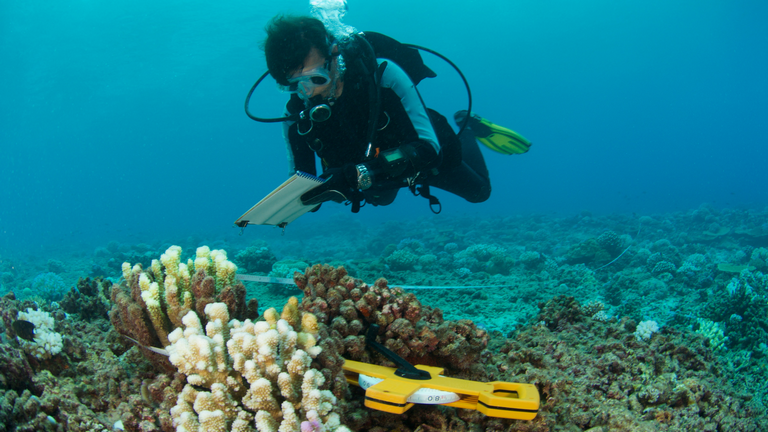
Study Marine Science at The University of Otago
Stretching over 30° of latitude, New Zealand’s coastline is more than 15,000 km long, and its exclusive economic zone (EEZ) is one of the largest in the world.
The physical and biological processes that power the Earth system unite in the ocean, determining Earth’s climate, supporting life and sparking our curiosity. Whether it’s finding new species, protecting sensitive habitats or solving our climate change problems, the University of Otago is uniquely placed to study these interlinked processes, and their effects on our lives.
Why Study Marine Science at the University of Otago?
The world is waking up to just how important the marine environment is to the survival of our planet. And when your office extends to the seashore and beyond, every day is a new challenge! A qualification in marine science from the University of Otago is internationally recognized, and its multidisciplinary nature opens up an ocean of opportunities.
Marine scientists study the biological, chemical, and physical processes in our marine environment.
The University of Otago offers undergraduate and postgraduate degrees focusing on pure and applied research in marine science, oceanography, and aquaculture. Students have access to
- world-class marine laboratories,
- fully equipped research vessels, and
- field stations in Fiordland and Stewart Island.
Studying marine science is a hands-on experience. As well as attending lectures and tutorials, you’ll have practical labs and field trips at sea. Alongside our research and teaching facilities in Dunedin, the university has a major research laboratory on the Otago Peninsula and field stations on Stewart Island and in Doubtful Sound. A fleet of research vessels, including the expedition vessel RV Polaris II, provides access to local marine habitats.
As a marine science student, you’ll develop practical skills in scientific diving, data collection, marine technology, analysis, and science communication, giving you the tools to thrive in the field or in further study.
Portobello Marine Laboratory
The Portobello Marine Lab lies in the middle of Otago Harbour, on the Portobello Peninsula. It was constructed atop an existing fish hatchery, to allow for state-of-the-art marine research.
The original hatchery ponds still hold water and animals as needed. The main research lab allows for most wet tasks, including experimentation with live organisms, controlled temperature experiments, microscopy, chemical analyses, biochemistry (PC1), animal physiology, and histology labs. The university also maintains a reference collection, research library, computers, and study area for research students, and staff/visitor offices.
In 2016, a 42-seat teaching laboratory was constructed, and the first classes were taught in the new facility in July 2017.
Other buildings on site include a field gear store, mechanical workshop, Resident Technician’s cottage, student accommodation, and an aquaculture centre. The New Zealand Marine Studies Centre is immediately next door offering marine education to the general public and schools.
The laboratory has its own wharf and boats of various types and sizes are available for fieldwork. There is lift access and stairs to all floors and to sea-level facilities.
New Zealand Marine Studies Centre
The New Zealand Marine Studies Centre (NZMSC) is the public face of the Marine Science Department. It strives to lead public marine education in New Zealand and to foster understanding, appreciation, and responsible management of New Zealand’s unique marine environment.
The NZMSC, based at Portobello, was opened in 1998 and incorporated the public aquarium (New Zealand’s first public marine aquarium, dating back to the 1930s). In 2012 the main aquarium closed to the public and was demolished in 2016 to make way for the new teaching laboratory. The facility offers fully equipped laboratories, a seminar room, marine aquarium tanks, marine displays, computers, and catering facilities.
Research Vessels
The Department of Marine Science oversees four vessels in safe ship management which are available for research and teaching activities.
Research Stations
The university owns field stations on Stewart Island and in Deep Cove, Doubtful Sound, Fiordland.
Outreach Opportunities for Marine Science students
There are other ways that students studying at the University of Otago can get involved in community engaged teaching and learning. The New Zealand Marine Studies Centre (NZMSC) is always on the lookout for keen marine science postgraduate students to join the education program as mentors. Occasionally, there are vacancies for part-time marine interpreters and aquarists.
Career Opportunities
A marine science degree opens doors to diverse and impactful careers. Otago graduates work in research, conservation, government, education, and industry—both in New Zealand and around the world. Employers include NIWA, the Department of Conservation, MPI, local councils, consultancies, and NGOs. Potential careers:
- Marine biologist
- Oceanographer
- Environmental consultant
- Fisheries scientist
- Aquaculture specialist
- Marine policy adviser
- Research technician
- Coastal resource manager
FAQs About Studying Marine Science at University of Otago
Is marine science for you?
Good preparation for a degree in marine science or aquaculture and fisheries would be at least 2 science subjects and either statistics or calculus in high school.
Which marine degree do I want?
Otago offers a 3-year Bachelor of Science (BSc) in either marine science or aquaculture and fisheries. Either subject can be combined with a second major in science (but not with each other), arts (BASc) or commerce (BComSc). Double-majors often take an extra semester or year to complete.
What do the majors in Marine Science and Aquaculture and Fisheries cover?
Marine science (MARI) offers a wide range of possibilities. It consists of a group of core papers hat provide a solid background in multidisciplinary marine science. Aquaculture and fisheries (AQFI) focuses on human interactions with the marine environment, including conservation, impacts, and community relationships. Both subjects allow students to add in other science subjects according to their interests (ecology, zoology, botany, chemistry, physics, geography, and geology). OzTREKK will help you sort out which one is right for you.
What’s a minor? Do I need one?
Otago’s degrees are structured so that students can add on a minor in a different subject. Most students can fit in one major and one minor in a 3-year degree. The idea is to complement the major with related but different expertise.
Not sure what you want to focus on?
Marine science degrees are flexible, so you can decide what aspects you want to study. One good approach is to take a wide range of first-year courses so that you can change major/minor easily. It’s common for students to change their major and/or minor as they discover what’s involved.
Marine Science Degrees
Bachelor of Science
Duration: 3 years
Campus: Dunedin
The Bachelor of Science enables each student to develop their own interests in a science subject (science major) and related subjects. Students have the flexibility to combine their major subject with other science subjects, as well as subjects from other disciplines across the university. Marine Science is a hands-on, field-intensive subject. Alongside lectures and tutorials, you’ll gain valuable experience through laboratory work and coastal or offshore field trips. To prepare for a degree in marine science, Otago recommends taking biology, chemistry, physics, and statistics or calculus in Year 12.
Master of Science (Thesis)
Duration: 2 years
Campus: Dunedin
The Master of Science encompasses both coursework and research. The first year involves mainly coursework and preliminary research preparation. Students will have the opportunity to contribute to existing fields of research, or to begin to develop new areas. Common pathways into the Otago Master of Science include marine biology, aquaculture and fisheries, marine physics and modelling, marine geology and/or geography, marine chemistry.
*
Ask A Question
Ask us about your program of interest, or if you have a question about our services.
CONTACT US TODAY